


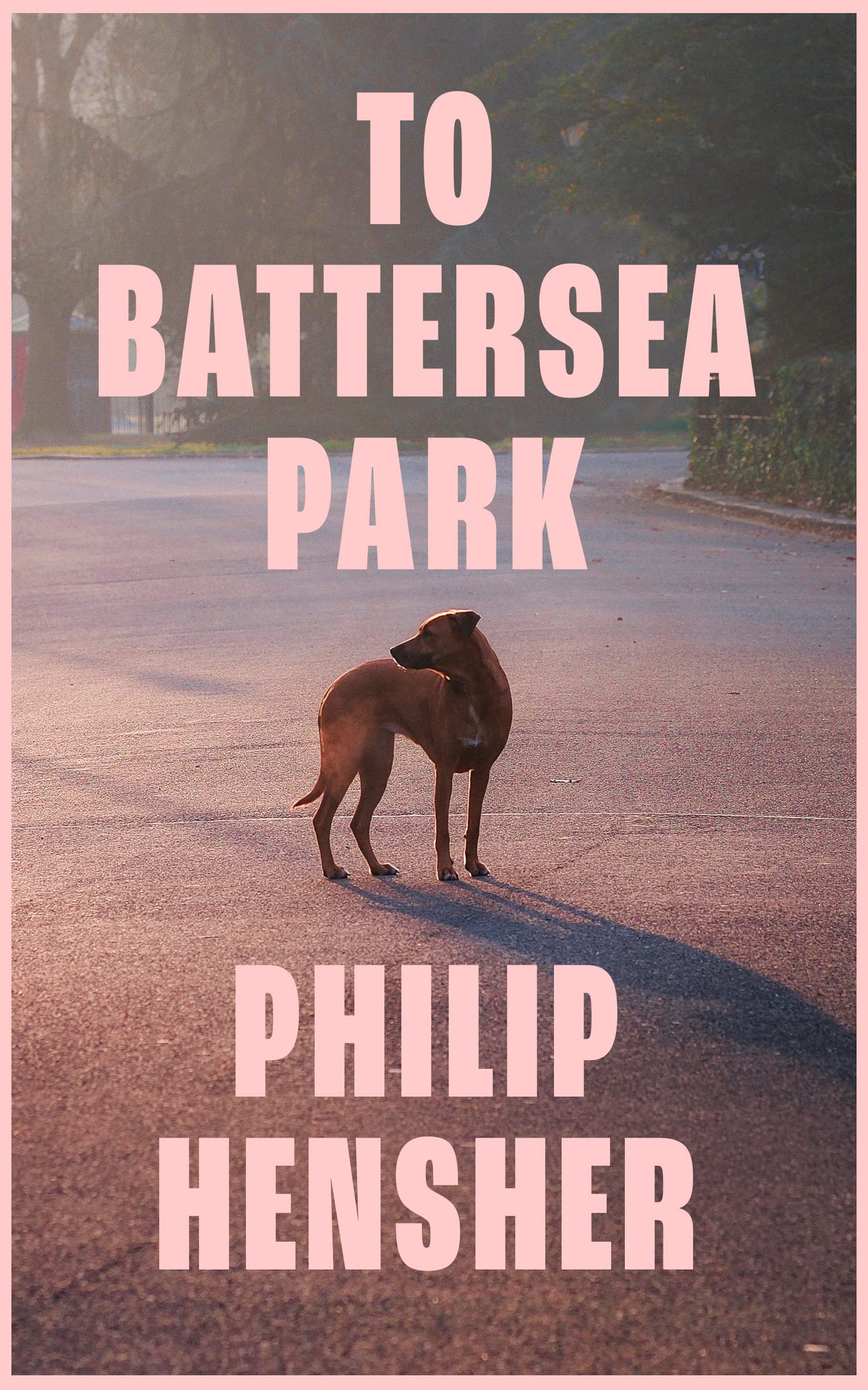
To Battersea Park
An underground river is discovered; an urban grove of pomeloes emerges. The imagination reaches out, and makes sense of the world. By the sea, two men walk into a future of uncertain violence.
There is time now to see the human dramas within a hundred yards (an abduction, a quiet breakdown, an outbreak of violence, a young mind beginning to stretch itself); to wait for the weather to change; to understand that what lies underneath this part of the city are seasonally wet pastures and woodlands.
Written in four parts, To Battersea Park explores the strata and sediment of a single place and time. It shows what brings us together, through love, through the clashes of what we want to do and what the world wants to do with us. Set in a large crowded city where we are forbidden to approach strangers, this is about what we humanity, imagination, and the love that emerges from many acts of telling.

Hensher was born in South London, although he spent the majority of his childhood and adolescence in Sheffield, attending Tapton School. He did his undergraduate degree at Lady Margaret Hall, Oxford before attending Cambridge, where he was awarded a PhD for work on 18th century painting and satire. Early in his career he worked as a clerk in the House of Commons, from which he was fired over the content of an interview he gave to a gay magazine.
He has published a number of novels, is a regular contributor, columnist and book reviewer for newspapers and weeklies such as The Guardian, The Spectator, The Mail on Sunday and The Independent. The Bedroom of the Mister’s Wife (1999) brings together 14 of his stories, including ‘Dead Languages’, which A. S. Byatt selected for her Oxford Book of English Short Stories (1998), making Hensher the youngest author included in the anthology.
Since 2005 he has taught creative writing at the University of Exeter. He has edited new editions of numerous classic works of English Literature, such as those by Charles Dickens and Nancy Mitford, and Hensher served as a judge for the Booker Prize. From 2013 he will hold the post of Professor of Creative Writing at Bath Spa University.
Since 2000, Philip Hensher has been listed as one of the 100 most influential LGBT people in Britain, and in 2003 as one of Granta's twenty Best of Young British Novelists.
In 2008, Hensher's semi-autobiographical novel The Northern Clemency was shortlisted for the Man Booker Prize. In 2012, Hensher won first prize German Travel Writers Award, and is shortlisted for the Green Carnation Prize. He also won the Stonewall Prize for the Journalist of the Year in 2007 and The Somerset Maugham Award for his novel Kitchen Venom in 1996. He wrote the libretto for Thomas Adès' 1995 opera Powder Her Face. This has been his only musical collaboration to date. His early writings have been characterised as having an "ironic, knowing distance from their characters" and "icily precise skewerings of pretension and hypocrisy". His historical novel The Mulberry Empire "echos with the rhythm and language of folk tales" while "playing games" with narrative forms.
He is married to Zaved Mahmood, a human rights lawyer at the United Nations.


